AT&T · Flagship case study
Using a national retail pilot to shape the next touchscreen experience
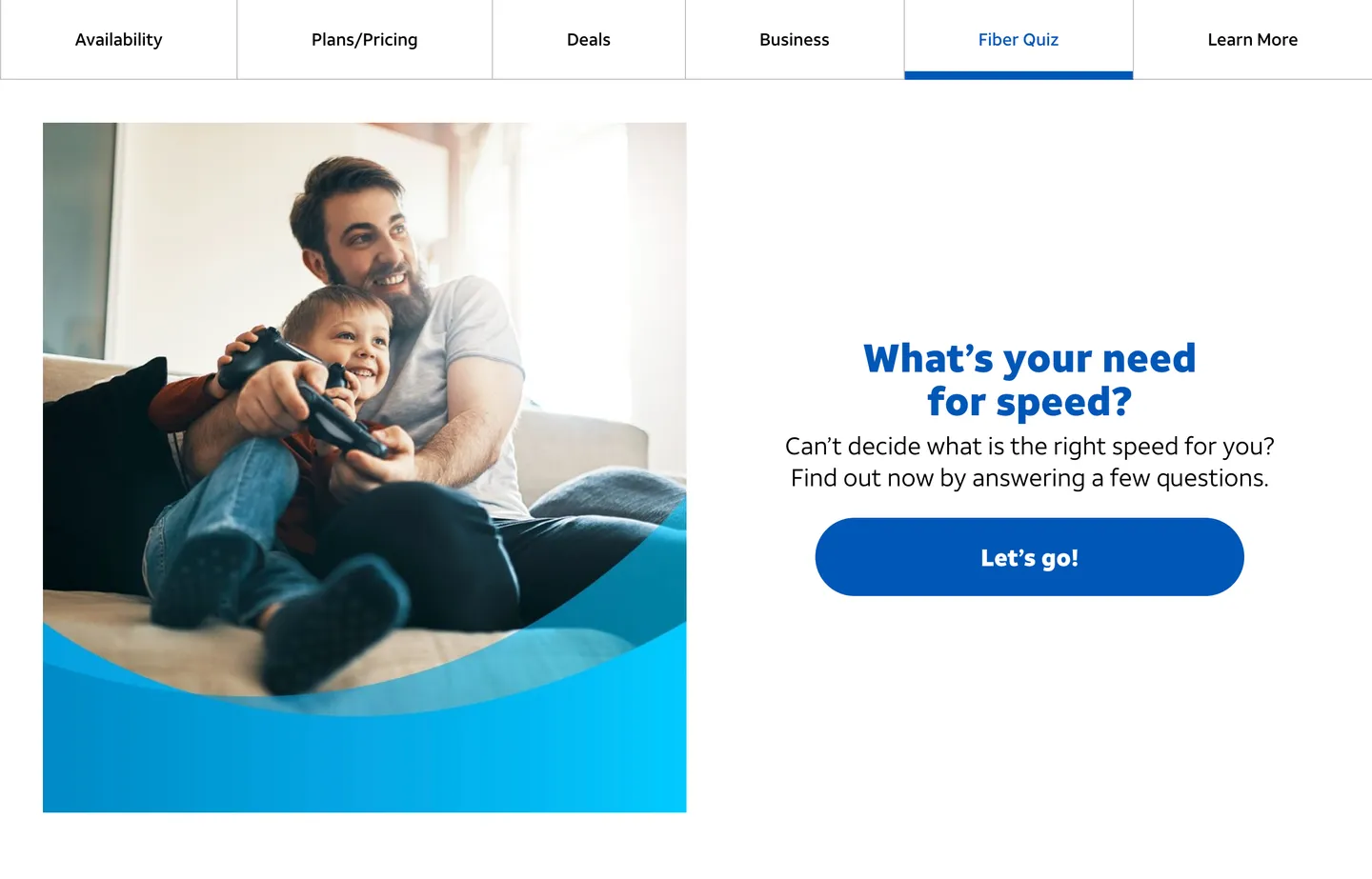
I led research and experience strategy for an AT&T Fiber education touchscreen pilot across three US markets. Fieldwork included more than 30 participants and input from over 100 retail workers. The findings informed content, accessibility, and rollout recommendations, and helped shape a two-phase direction for the future retail experience.
[NEED FROM LOGAN: exact pilot dates, current rollout status, participant breakdown, and evidence connecting reported interest to actual purchase behavior]
Context: AT&T
AT&T wanted to build awareness of Fiber in stores and understand the potential of interactive retail education.
The challenge
The experience needed to serve different literacy levels, accessibility needs, and connectivity contexts.
The insight that changed the direction
Purchase decisions often continued at home. Education needed to support both in-store exploration and later conversations with other decision makers.
Before / Observed context
The initial pilot exposed small-screen usability, content, and accessibility gaps.
After / Direction taken
Recommendations prioritized relevant content, clearer navigation, accessibility, and a staged future direction.
What I did
- 01Pilot across three US markets
- 02Combine customer and employee research
- 03Recommend staged experience improvements
Evidence statusPilot research complete; current rollout status needs confirmation
- Developed experience and content strategy and information architecture with internal and external teams.
- Led qualitative fieldwork in Silicon Valley, Denver, and Dallas, alongside quantitative monitoring.
- Presented findings to five stakeholder audiences and recommended staged content, UX, and accessibility improvements.
Annotated screens and user flows
[NEED FROM LOGAN: approved annotated screens or user flow for AT&T; include captions and delivery status]
Before and after evidence
[NEED FROM LOGAN: matched source artifacts showing the observed problem and the delivered or proposed response]
Outcomes and evidence
Pilot research informed a two-phase strategy. Customers reported purchase interest, but verified conversion uplift is not supplied. Larger touchscreens and future interactions were described as development directions in the original source.
[NEED FROM LOGAN: exact pilot dates, current rollout status, participant breakdown, and evidence connecting reported interest to actual purchase behavior]
Reflection: decisions and trade-offs
The work balanced near-term improvements with a longer-term retail direction. Adapting findings for different stakeholder audiences supported alignment. Accessibility needed to be considered earlier in the pilot.
[NEED FROM LOGAN: Logan’s specific retrospective on what he would do differently and the stakeholder alignment involved]